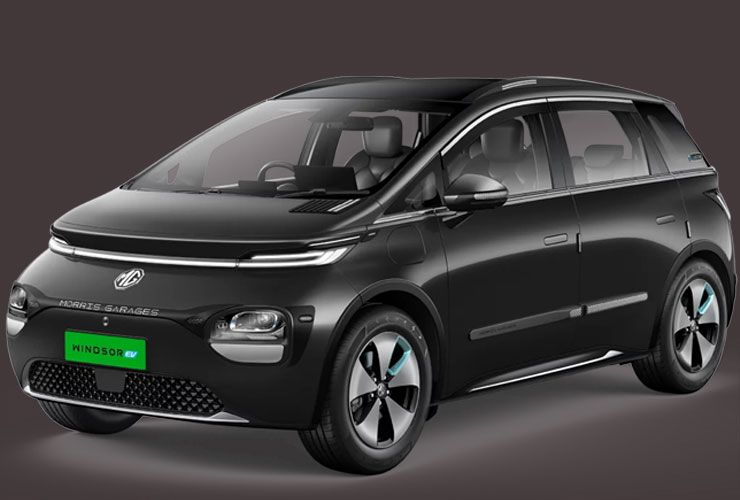
MG Windsor EV Owner: My Car Pays Its Own EMI!

Electric vehicles are gaining ground in the Indian market. Even within the mass-market segment, we now have EVs that differ in character and serve different target audiences. People looking for outright performance and those who want hefty savings on operating costs- all have enough to choose from. MG Windsor is now a hot-selling model. People love it for the cabin experience, features, and strong value proposition. It has a strong focus on staying cost-effective and energy efficient. In the past, we have seen many happy Windsor owners sharing their experiences online. In the most recent case, Ferrero’s regional manager took to LinkedIn explaining how his ‘Windsor EV pays its own EMI’. The specifics of this math are very interesting.
Mohit Bagla, an MBA graduate and a qualified Chartered Accountant, now serves as the Regional Manager (RM)- East at Ferrero. He had been using a diesel car and transitioned to the Windsor EV recently. He starts the post by saying that it was not an emotional decision, but a well-calculated financial choice. He then explains the math behind this, showing how it pays the EV’s EMI partially.
Previously, he used to spend Rs 12,500 every month on diesel- ‘money getting burned’, as now asset was being created despite spending so much. He, doesn’t, however, mention which diesel car/SUV he used to own then. Once he switched to the Windsor EV, monthly fuel expenses came down drastically. It needs a charge worth approximately Rs 2000 every month for the same commute. This translates to massive monthly savings of Rs 10,500.
The Windsor that he bought has an on-road price of around 16 lakh rupees. In his case, the monthly EMI is around Rs 17,500. (He doesn’t mention the exact down payment he paid or the actual loan amount). The money saved each month- Rs 10,500, is thus 60% of the EMI amount!
He uses the sum saved from ‘fuel’ to pay the car’s EMI- something he couldn’t even think of if he had chosen another diesel vehicle belonging to the same price range. He describes this as ‘the car paying most of its own EMI’!
Later in his post, Mohit talks about the total ownership costs, depreciation, and the resale value to be expected. He bases the comparison on a diesel car with the same on-road price. If he were to keep a diesel car for 10 years, the depreciation would be so high that the value would drop to almost 20%. Expect it to sell for around Rs 3 lakh.
At the rate of Rs 12,500 per month, the total spent on fuel would amount to Rs 15 lakh over 10 years. Yearly maintenance costs would be around Rs 30,000, amounting to Rs 3 lakh over 10 years. He would end up spending 18 lakh on the vehicle in keeping it operational and losing 80% of its value if he were to keep it for 10 years. Factor in the depreciation, and the total money lost here is Rs 31 lakh.
Mohit then talks about the EV. The charging cost for 10 years would be approximately Rs 2.4 lakh. Maintenance costs would be one-third of that of a diesel car- Rs 10,000 per year. Rs 1 lakh for 10 years. In 10 years, the EV will also depreciate as much as a diesel car. However, since the fuel and maintenance expenses are much lower, the ‘total money lost’ here is just around Rs 16.4 lakh! In other words, a savings of Rs 14.6 lakh in 10 years!
The math shared by this professional is indeed interesting. It shows just how rewarding EVs can be, if the owner has well-defined daily commuting plans and if he/she lives in a place with promising charging infrastructure.